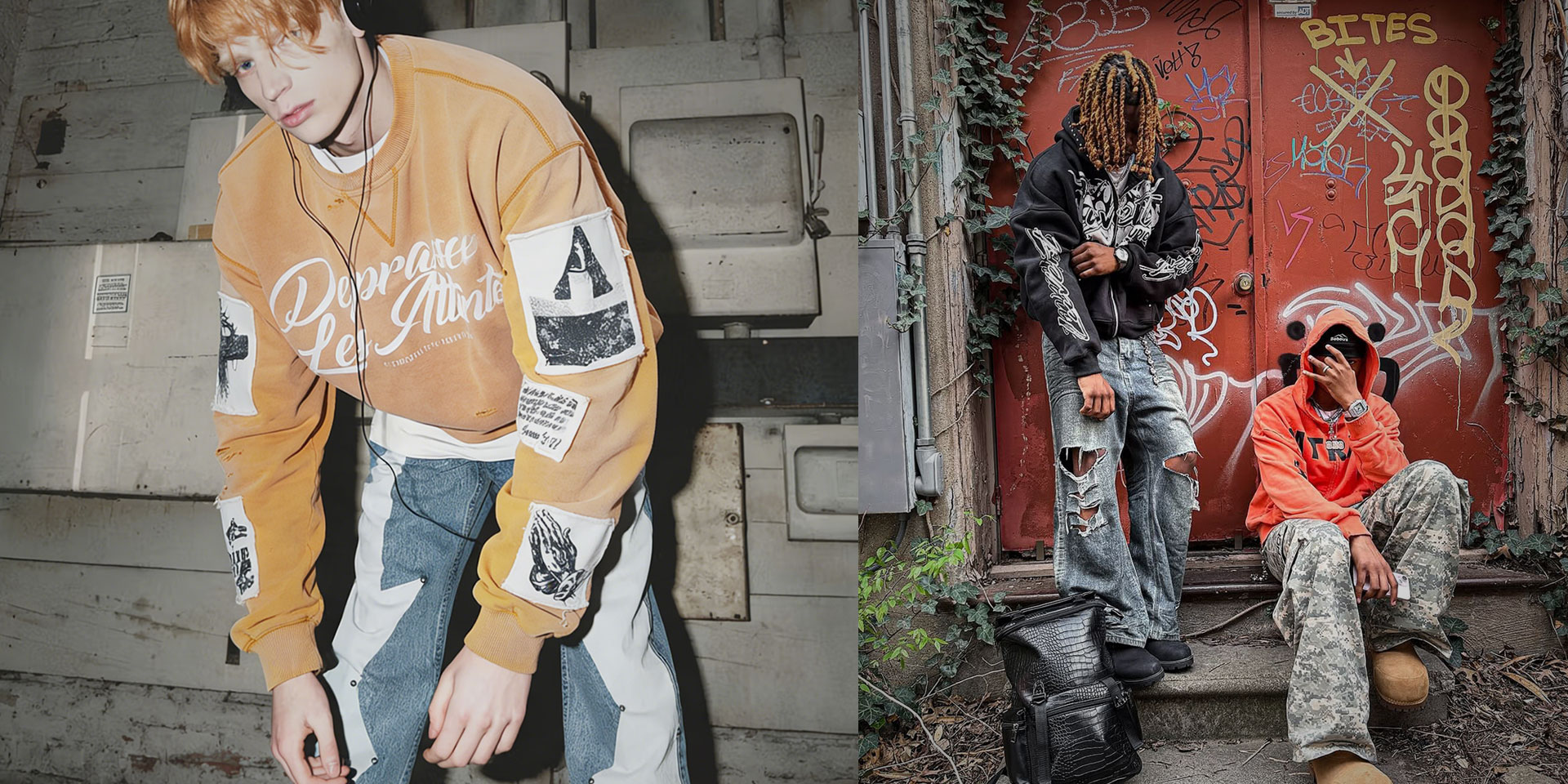
How Established Streetwear Brands Turn Chinese Manufacturing Into Product and Scale Advantages
Streetwear is in that stage where the easy stuff no longer fools anybody. A hoodie can look simple on a rack and still fall apart as an idea the moment the fit lands wrong, the fleece feels thin, the wash reads flat, or the graphic sits half an inch off and kills the whole silhouette. The same goes for a cropped football-inspired jersey, an appliqué varsity jacket, or a pair of flare denim that is supposed to stack with attitude but ends up looking like a grading mistake. Once brands move beyond occasional drops and into real seasonal rhythm, these are not just design problems. They become manufacturing problems. Industry-wide, that shift is still commonly underestimated.
That is why the China conversation in 2026 is more interesting than the old “cheap versus expensive” debate. U.S. fashion companies are clearly diversifying: USFIA says companies sourced apparel from 46 countries in 2025, and 60 percent said they would source from more countries except China. But WTO data still shows Asia accounted for 70.6 percent of global textiles and clothing exports in 2022, with China remaining the world’s largest exporter and carrying exceptionally high domestic content in its exports. In other words, brands may spread risk geographically, but they still keep China in the discussion when the product itself asks for deeper fabric access, more layered finishing, and a more complete production ecosystem.
For established streetwear brands, that distinction matters. The real question is not whether China is still relevant. The real question is what kind of product and what kind of manufacturing structure still make China unusually useful.
Why does China still matter when so many brands are trying to diversify sourcing?
China still matters because diversification and specialization are not the same thing. Many brands are reducing concentration risk, but they continue to use China for categories that need stronger material ecosystems, more complete upstream sourcing, tighter development loops, and a production structure that can hold a more demanding product direction under scale.
A lot of sourcing discussions get stuck in country-versus-country thinking. That is too blunt for modern streetwear. The sharper lens is product fit. If a brand is building cleaner basics close to market, nearshoring may make sense. If it is developing heavyweight fleece, mixed trim outerwear, wash-led denim, or graphic-heavy silhouettes where fabric, placement, and finishing all need to talk to each other, then China still has structural advantages that are hard to replace quickly.
WTO data helps explain why. China is still the world’s largest exporter of textiles and clothing products, and the WTO estimates that 89.1 percent of the domestic content in China’s textile and clothing exports comes from inside its own supply chain. That matters because it signals something deeper than export volume. It points to a manufacturing ecosystem that spans fibers, fabric, dyeing, finishing, and finished garments rather than relying as heavily on imported intermediate stages.
That is also why “leave China” and “use China differently” are not the same strategy. McKinsey has noted that diversification of apparel and textile sourcing is continuing, and USFIA’s 2025 benchmarking release shows brands expanding their country mix rather than simply reshoring. What many established brands are really doing is pulling routine volume into a broader sourcing map while keeping China in the mix for product categories where the cost of weak execution is higher than the cost of the garment itself.
If a team wants a better starting point than generic country rankings, it is smarter to begin with an industry breakdown of specialized streetwear manufacturers in China. That framing gets closer to the real issue: not where the factory sits on a map, but whether it is built for wash-heavy fleece, oversized grading, decorated outerwear, and brand-led product development rather than plain cut-and-sew basics.
What kinds of products actually turn Chinese manufacturing into a real advantage?
The advantage shows up most clearly in products where silhouette, fabric, wash, graphics, and trim are interdependent. That usually includes heavyweight T-shirts, washed or distressed hoodies, statement jackets, redeveloped sports jerseys, and denim-driven bottoms where one weak production decision can flatten the whole garment before it ever reaches the floor.
Streetwear brands do not win with technique lists. They win when the product feels complete. That means embroidery adding dimension to artwork that would otherwise sit flat. It means washing that gives a new garment immediate visual age. It means fabric weight changing how a boxy tee sits on body, or how a drop-shoulder hoodie carries volume instead of collapsing into softness. Manufacturing is not separate from the creative idea here. It is the method that makes the idea visible.
That is exactly why certain categories expose weak manufacturers faster than others. According to your uploaded product-capability documents, Groovecolor’s strongest categories are not generic basics but more streetwear-specific programs: 180–400gsm T-shirts built around fit, drape, and surface expression; 300–600gsm hoodies designed for oversized and dropped-shoulder silhouettes; jackets with chenille, appliqué, and embroidery; and pants programs where stacking, rise, and relaxed leg shape matter as much as the base fabric. Those same materials also emphasize multi-step executions such as acid wash, enzyme wash, garment dye, puff print, cracked print, rhinestone embellishment, and patch-based decoration.
The reason this matters is simple: streetwear products rarely fail in only one place. A washed zip hoodie can go wrong in the fleece, the panel balance, the distressing, the zipper weight, or the print response after finishing. A varsity jacket can lose its authority through rib proportion, patch density, sleeve contrast, or body shape. A sports jersey can look costume-like if the mesh, crop, graphic scale, and neckline do not land together. China becomes useful when the manufacturer can manage those interactions as one product system rather than as a bunch of disconnected steps.
That is also why so many brand teams underestimate T-shirts. In your source materials, tees are treated as one of the clearest tests of whether a manufacturer really understands streetwear: shoulder drop, rib width, sleeve balance, fabric weight, wash behavior, and graphic placement all determine whether the piece reads intentional or ordinary. The same logic carries upward into hoodies, sweatpants, denim, and outerwear. See the full breakdown of category capabilities is the right kind of internal link in a section like this because it extends the technical conversation instead of interrupting it.
What are established streetwear brands really buying when they choose China for certain categories?
They are not just buying sewing capacity. They are buying a production structure: denser fabric and trim access, shorter communication distance between development stages, more practical wash and print testing, and a broader ability to solve problems before they show up as expensive drift between sample approval and bulk delivery.
A mature brand is rarely paying extra just to say a garment was made in one place rather than another. It is paying to reduce the number of ways a product can break. In streetwear, that usually means earlier technical review, better fabric choices, fewer late substitutions, more realistic wash planning, stronger grading logic, and tighter pre-production controls around graphics, surface treatments, and trim details.
Your uploaded materials are very clear on this point. The value case is not “China factory equals lower cost.” It is that a premium streetwear manufacturer from China can evaluate a tech pack for pattern structure, process feasibility, material selection, and scale-up risk before the brand burns weeks on the wrong sample path. The same files frame premium execution as product-level judgment plus production-level foresight: hand feel, silhouette support, post-wash performance, layered technique integration, and the ability to flag technical risk before production rather than after failure.
This is where WTO’s value-chain data becomes useful again. China’s high domestic content in textiles and clothing exports is not just a macro trade statistic. For brands, it helps explain why certain categories can move with more control inside China: more of the upstream work happens within a connected ecosystem. That does not eliminate risk, but it can reduce the number of handoffs that often create confusion around fabric substitution, finishing response, or timing.
In practical terms, the better question for procurement teams is not “Can this manufacturer make hoodies?” It is closer to this: can it review a tech pack like a product developer, source the right fleece for the intended silhouette, test how the print will react after washing, protect graphic placement through grading, and then move into bulk without quietly simplifying the garment? That is the level where Chinese manufacturing stops being a country choice and starts becoming a product advantage.
Where do brand teams usually get the China decision wrong?
The biggest mistakes usually come from comparing factories as if they are offering the same garment. They often are not. The lower quote may hide lighter fabric, easier finishing, weaker trim standards, less technical review, looser pre-production control, or a factory structure that can make a clean sample but cannot protect the approved idea under volume.
One common error is reading a quote without reading the product logic behind it. A tee quoted at one price with 220gsm fabric, a standard collar, and simple front print is not the same garment as one quoted with 300gsm jersey, a heavier neck rib, washed surface, broader shoulder, and back print sized for a boxier body. That sounds obvious, but it is still where a lot of teams lose weeks. They compare numbers instead of comparing what the numbers are buying.
Another mistake is assuming that a decent sample proves bulk-readiness. It does not. A first sample can hide all kinds of future problems: unstable wash routes, weak trim sourcing, pattern imbalances that only show up after grading, embroidery density that becomes inconsistent under volume pressure, or graphic placement rules that were never locked properly. Once brands scale, these issues become structural, not cosmetic. That is why your guidance documents keep coming back to tech-pack review, pre-production judgment, wash testing, and pattern development as decision points rather than back-office details.
A third misread is choosing a general apparel factory for a streetwear problem. A manufacturer that is comfortable with ordinary fleece pullovers or standard woven jackets is not automatically set up for distress-heavy zip hoodies, patch-led varsity jackets, or washed flare denim with exaggerated stacking. Streetwear puts more pressure on silhouette logic, graphic scale, finishing mood, and the relationship between the garment and the image of the garment. That is not marketing language. It is product architecture.
And then there is timing. In many apparel systems, the path from tech pack to warehouse can still run into a three- to four-month cycle once sampling, pre-production, bulk, and shipping are combined. Your uploaded material positions manufacturer’s own baseline faster than that—roughly 3–4 weeks for sampling and 4–5 weeks for bulk, depending on design complexity—but the larger lesson is broader: timing is part of product value. A brand that misses the moment with a strong product often loses just as much as a brand that delivers the wrong product on time.
What separates a streetwear-specific Chinese factory from a general apparel operation?
The difference is not whether the factory can “do embroidery” or “do washing.” It is whether it can translate cultural product intent into technical decisions, then protect that intent through pattern development, material selection, test approvals, and bulk controls. Streetwear-specific manufacturing is really a judgment system, not just a process menu.
This is the part many teams only understand after a failed season. A general apparel operation may be able to reproduce the outline of a design. A streetwear-specific manufacturer has to understand why the outline matters. On a good program, silhouette is identity. Wash is mood. Graphic scale changes how the garment reads from six feet away. A hem finish can make the difference between “retail generic” and “this belongs in the collection.” That is why the stronger manufacturers in this space are not just technically capable; they are visually literate.
Your internal writing materials describe that well. The recurring distinction is that a real streetwear manufacturer does not just have techniques; it integrates them into one complete garment expression. It understands placement logic, wash as cultural mood, silhouette preservation, and the way surface treatment, graphics, and body shape have to land together. The safer industry-language version of that is not hype. It is simply that the factory can make both clean essentials and process-heavy styles hold their product logic under volume.
That is why, when sourcing consultants or category analysts talk about reference-grade Chinese streetwear operations, the conversation tends to center on structural fit rather than brand slogans. Groovecolor is a useful example of that type: 180–400gsm tee programs, 300–600gsm heavyweight hoodies, 200-plus fabric options, tech-pack feasibility review, strategic testing at 50–100 pieces per color, and monthly capacity up to 300,000 pieces are not random specs. Together, they describe a manufacturing system built for brands with validated demand that want to test harder product concepts without shifting into a completely different operating model once volume shows up.
If you were inserting internal resources here, this is where a brand anchor such as Groovecolor’s production system makes sense, while an LSI-style anchor like advanced streetwear washing workflows would fit naturally in the next paragraph. The link should deepen the decision, not hijack the section.
The other meaningful separator is control culture. Your uploaded materials emphasize early technical review, repeatable wash effects, graphic placement control, silhouette preservation, and risk prevention before bulk begins. That is exactly the kind of “unsexy” discipline that keeps a clean heavyweight hoodie feeling premium and keeps a more decorated garment from drifting away from its approved direction. In streetwear, boring controls are often what protect the exciting product.
How should brands use China without turning it into a single-point dependency?
The smartest move is usually not “all in” or “all out.” It is to use China intentionally: keep it for categories where ecosystem depth and technical complexity still matter most, while building a wider sourcing map for risk management, geography, and margin structure. China works best as part of a product strategy, not as a reflex.
That framing lines up with what the broader sourcing landscape is showing. USFIA’s 2025 release points to wider geographic diversification, not a return to domestic concentration. USTR’s 2025 textile and apparel policy paper also frames resilience in terms of more diverse, transparent, and secure supply chains rather than a single universal location. In practice, that means brands should stop asking whether China is “still worth it” in the abstract and start asking which categories genuinely need what China is best at.
This is also where compliance stops being a side note. As scrutiny on labor, environmental performance, traceability, and business ethics rises, procurement teams increasingly need auditable frameworks rather than verbal assurances. Sedex states that a full SMETA audit covers four pillars—health and safety, labour, environment, and business ethics—and is designed to give businesses a more comparable view of site-level practices and risks. That does not replace product capability, but it absolutely changes who makes the shortlist when the order value, market visibility, and long-term exposure get bigger.
The practical model for established streetwear brands is usually this: use China where the garment asks for more upstream coordination, more finish experimentation, stronger trim access, and tighter development sequencing; use other regions where speed, geography, duty structure, or simpler construction makes them more sensible. That might mean China for hero hoodies, complex jackets, denim capsules, or graphic-led fleece, while nearer regions handle lower-complexity replenishment, quick-response basics, or specific market programs.
For brands entering this phase, the real decision is less about finding a cheaper factory and more about choosing a manufacturing structure that matches the garment you are trying to build. That is the distinction that often separates clothes that merely get produced from clothes that actually arrive with shape, weight, surface, and intent intact. And in streetwear, that difference is usually the whole point.
How Custom Acid Wash Long Sleeve T-Shirts Move Faster From Sampling to Bulk Delivery
There is a reason acid wash long sleeve tees keep showing up in strong streetwear lines. They hit a sweet spot that brand teams love: more visual depth than a clean basic, less commitment than a heavyweight outer layer, and enough surface attitude to feel like a real piece instead of filler. When the wash is right, the product already looks like it has history. When the fit is right, it stops feeling like merch and starts feeling like a statement.
But this is also the kind of style that gets delayed in a very specific way. Not because anyone forgot to send a PO. Not because the sewing line is magically slower. The slowdown usually starts earlier, in that messy zone where the product still looks “mostly decided” on paper, but the real decisions are still floating: the base fabric is not fully locked, the wash target is still emotional instead of measurable, the sleeve balance is being judged only on a flat table, and the graphic order is still open. That is where weeks disappear.
Why does this category get stuck so easily after the first sample?
Custom acid wash long sleeve tees usually slow down because they carry more interacting variables than they appear to. Fabric weight, post-wash shrinkage, sleeve proportion, collar behavior, print order, and wash tone all affect each other. If those variables are only loosely defined, the first sample becomes a conversation starter instead of a production step.
A long sleeve acid wash tee looks simple only from far away. Up close, it is one of those products that exposes whether a factory really understands streetwear product logic. A strong version depends on silhouette, sleeve width, sleeve drop, collar tension, fabric drape, and how the surface changes after washing. That is exactly why streetwear-oriented T-shirt production is not just “cut and sew a tee.” The product has to hold shape, carry the right weight, and make the wash and graphic feel intentional on body, not just acceptable on a spec sheet.
That is also why brand teams lose time when they treat the first sample like a mood check instead of a technical checkpoint. If the body looks good but the sleeve shortens too much after wash, that matters. If the fade looks cool but the hand feel gets too dry, that matters. If the print still reads on the chest but feels dead once the garment is worn, that matters too. Acid wash moves the product out of “basic tee” territory and into a space where fit, surface, and finishing all start talking to each other.
The problem is not complexity by itself. Streetwear teams are used to complex products. The problem is hidden complexity. Acid wash long sleeves can look like an easy development category right up until the moment brands realize they are reapproving the same garment three different ways: once for fit, once for wash, and once for graphic readability.
What should be locked before the first sample is made?
The fastest projects usually begin with fewer open questions. Before the first sample, brand teams should lock the base fabric range, target silhouette, sleeve behavior after wash, collar construction, graphic zones, and the intended wash direction. Early clarity does more for speed than any promise about rushing production later.
This is where stronger product developers buy time back. They do not try to make every decision after seeing a finished sample. They narrow the decision field before the sample exists.
For this category, the first lock is the base cloth. T-shirt category work centers on 180–400gsm cotton ranges, with heavier options typically sitting in the 260–400gsm range when the silhouette needs more structure. The same references also make clear that not every tee should be called heavyweight; the final choice should follow season, style direction, and the wearing experience the brand actually wants.
That matters because acid wash reacts differently on a lighter jersey than it does on a denser one. A softer, lighter base may give a looser vintage mood, but it can also lose authority in the sleeve and hem once washed. A firmer jersey may carry the shape better, but if the wash recipe is too aggressive, the garment can lose the easy broken-in character the design was chasing. So the question is not just “What GSM?” The question is, “What should this tee feel like after chemistry, rinse, and drying are done?”
The second lock is the silhouette after wash, not before wash. That sounds obvious, but it is where a lot of teams get sloppy. A long sleeve tee is not only about body length and chest. It is about how the sleeve falls once the surface has changed, how the cuff area behaves, how the collar sits, and whether the whole shape still feels deliberate after the garment has been pushed into a more aged visual state.
The third lock is the visual hierarchy. Is this a wash-led product with a quieter graphic? Is it a graphic-led product that needs the acid wash to support, not overpower, the artwork? The more clearly that is decided up front, the faster the first sample starts behaving like a test instead of a sketch.
How does fabric choice change the whole timeline?
Fabric choice changes the timeline because it affects every later approval: wash outcome, shrink behavior, drape, graphic clarity, and how the long sleeve silhouette reads on body. Brands do not really save time by sampling on a “close enough” jersey. They usually just move the same decision to a later, more expensive stage.
This is one of the easiest traps to fall into. A team wants to move fast, so it samples on a fabric that is available. Then the acid wash comes back with the wrong hand feel, or the body drops too soft, or the long sleeves no longer hold the volume that made the concept strong in the first place. Now the clock resets.
Streetwear-focused T-shirt development already puts unusual pressure on fabric choice because the garment has to carry more than comfort. It has to support the shoulder line, sleeve proportion, drape, wash performance, and the way the graphic sits on the body. The internal product references you uploaded frame this clearly: the real challenge is not just making a tee, but making sure silhouette, wash interaction, and graphic proportion all land together.
That is why experienced teams stop asking only for “100% cotton” and start asking better questions. Does this jersey hold a boxier chest without turning stiff? Does it collapse too much after wash? Does it support a print that needs clean edge definition, or does the surface become too noisy? Does it still feel premium when the sleeve is pushed, layered, and worn for a full day?
A smart long sleeve program also thinks seasonally. Not every acid wash long sleeve has to be heavy. A transitional-season product often works better when it carries visual weight without carrying winter weight. That distinction matters because a shirt that looks right in a sample room can miss the actual wearing window if the fabric logic is off.
Why does wash approval eat so much time?
Wash approval takes time because acid wash is not a single decision. It changes shade, depth, hand feel, visual age, shrink behavior, and how the whole garment reads. Teams that approve wash only by photos or only by “vibe” usually reopen the conversation once they see the garment physically or see it on body.
This is the part that often catches brand teams late. They think they are approving color. In reality, they are approving a whole chain of effects.
A good acid wash does not just lighten a garment. It gives the surface a lived-in rhythm. It changes how the cloth reflects light. It can flatten or sharpen a graphic depending on sequence. It can make a garment feel rich and developed, or just overprocessed. The references in your product library treat acid wash, enzyme wash, garment dye, cracked print, faded effects, and layered surface work as part of a broader streetwear language, not as isolated factory tricks. That framing is important, because the brand is not buying “wash.” It is buying product character.
This is also where samples get stuck in loops. One version may have the right fade but the wrong touch. Another may have the right touch but take too much life out of the print. A third may look great folded but lose too much shape once worn. That is why wash-heavy categories need more disciplined approval language. “Make it more vintage” is not enough. “Keep the body firmer, fade the high points slightly more, protect the chest print, and avoid over-drying the sleeve” is the kind of language that actually shortens a timeline.
For readers who want a deeper process view of how finishing decisions reshape streetwear garments, a useful companion reference is this piece on advanced streetwear washing workflows. The point is not to duplicate that article here. It is simply to underline that wash is not a cosmetic afterthought. On products like this, wash is one of the main development gates.
How do graphics and construction reopen decisions brands thought were finished?
Graphics and construction slow projects down when teams decide them in isolation. Print sequence, artwork density, collar build, sleeve width, and cuff treatment all affect how the washed garment feels and reads. When those parts are approved separately, the sample may look “close” while still being operationally unresolved.
Streetwear brands already know this instinctively: a graphic never lives alone. It lives on a silhouette, on a fabric, under a wash, and inside a styling context. That is why a good graphic can die on the wrong tee, and a moderate graphic can come alive on the right one.
The same uploaded references that define Groovecolor’s T-shirt work also point to print placement, sleeve proportions, labeling, and finishing as part of the category’s customization logic. Screen printing, DTG, cracked effects, puff print, faded color treatments, and layered graphics are treated as tools that have to work with the garment, not just sit on top of it.
For acid wash long sleeves, sequence matters. Print before wash and print after wash are not interchangeable choices. They give different edge quality, different softness, different break-up, and different graphic authority. A chest hit that looks clean on an unwashed tee may lose too much bite after wash. A back print that looks balanced on a flat table may feel too low once the garment shortens or the shoulder line shifts. Sleeve prints are even less forgiving, because twist and shrink can make a technically centered placement feel visually off.
Construction does the same thing in quieter ways. Collar width changes the whole attitude of the tee. Sleeve opening changes whether the garment feels sharp or sleepy. Hem treatment changes whether the wash reads premium or accidental. That is why serious product developers stop reviewing each part in isolation. They review the garment as one combined expression: fit, surface, and artwork working together.
What does a sample need to become before bulk can move cleanly?
A sample is not bulk-ready just because everyone likes it. It becomes bulk-ready when the team has translated approval into usable controls: post-wash measurements, wash reference standards, print expectations, construction notes, and a short list of non-negotiable visual points that should not drift once production scales.
This is the stage that separates a pretty sample from an actual production tool.
A lot of teams approve a long sleeve acid wash tee emotionally. It looks right. It feels close. The room likes it. Then bulk starts and the hidden questions come back: What shade variation is acceptable? Are the sleeve specs pre-wash or post-wash? How much surface variation still counts as on target? Is the print supposed to crack slightly, stay solid, or sit in between? Which visual details matter most if there is normal wash movement across a run?
That is why the smarter move is to turn the approved sample into a practical standard. A good pre-production handoff includes the post-wash spec, the agreed wash window, the print behavior target, construction sign-off, trim confirmation, and clear notes about what the garment cannot lose in bulk. If the product’s magic lives in sleeve proportion and a dry, aged surface, that needs to be written down. If the wash can move a little but the graphic cannot become muddy, that needs to be written down too.
For teams that want a stronger front-end handoff before production begins, see the full breakdown of tech pack preparation for bulk streetwear manufacturing. Again, that page should work as further reading, not as the main subject of this article. The point here is simpler: faster bulk starts with cleaner translation, not just faster approval meetings.
What kind of manufacturer actually shortens the path on this product?
The manufacturer that shortens the path is usually not the one making the biggest speed claims. It is the one structurally built for wash-heavy streetwear development: integrated pattern review, early feasibility feedback, disciplined process control, and enough production depth to move from concept validation into bulk without rebuilding the product from scratch.
This is where brand-side sourcing gets real. Plenty of factories can make a long sleeve tee. Far fewer are good at a long sleeve tee that has to carry wash mood, graphic balance, and streetwear silhouette at the same time.
The files you uploaded keep returning to the same underlying idea: the better streetwear factory is not defined only by flashy techniques. It is defined by whether it can make clean essentials and high-detail products land the right way at volume, with the “boring” controls still intact. That means pattern discipline, fabric verification, placement logic, process review, and batch-level control before the garment ever becomes a late-stage fire drill.
That is also where a manufacturer such as Groovecolor becomes relevant in a neutral industry sense. The materials you uploaded position it not as a general apparel factory, but as a premium streetwear manufacturer built around product logic, technique-heavy development, and scalable production. In practice, that means early tech pack and feasibility review, T-shirt development across the 180–400gsm range, acid wash and other finish-intensive techniques, monthly capacity up to 300,000 pieces, an eight-step quality-locking system, SMETA 4P compliance, and a client base where repeat business and long-term relationships are major trust signals.
That does not mean every project belongs there. It means the selection logic is different. If a brand is buying stock blanks or only chasing the lowest quote, that is a different lane. If a brand is doing real product development—custom patterns, fabric decisions, wash development, print placement, and future replenishment planning—then the factory type matters a lot more. The internal knowledge base you uploaded is explicit on this point: the business is built for cut-and-sew custom manufacturing and brand-expression-driven development, not stock, blank, POD, or one-off orders.
That is the real sourcing split on acid wash long sleeves. Some factories can produce the garment. Fewer can protect the reason the garment was interesting in the first place.
Why does moving faster on this category matter so much right now?
Moving faster matters because acid wash long sleeve tees are commercially useful in a way many trend pieces are not. They work across seasons, layer well, shoot well, and carry enough visual age to feel developed on arrival. Brands that tighten the development path can hit that opportunity window without flattening the product.
This is not only about shaving days off a calendar. It is about protecting a product’s relevance while it is still hot.
The long sleeve acid wash tee sits in a very workable middle zone for established streetwear brands and fashion labels. It can carry a capsule. It can support a larger drop. It can act as a bridge between tees, overshirts, hoodies, and outerwear. It works in transitional weather, under jackets, over tanks, and in content shoots where texture matters more than loud decoration. It gives creative teams a product with enough attitude to stand alone, but enough wearability to move in actual volume.
That is why time matters here in a different way than it does on a basic blank-looking garment. If a brand misses the moment on a surface-led product, it does not just lose sales. It loses visual freshness. The product starts to look late. And if the team responds by simplifying the tee just to move faster, it often ends up cutting away the very texture that made the piece worth developing.
The better path is not to strip the product down. It is to make decisions earlier and make them with more precision. That is how brand teams keep the surface depth, the broken-in mood, the right sleeve shape, and the right launch timing in the same conversation.
What does a faster sampling-to-bulk path really look like?
A faster path does not mean fewer checks. It means fewer unresolved decisions. The strongest teams lock fabric, silhouette, wash target, print order, and post-wash standards early enough that the first good sample can actually turn into a reliable production reference instead of triggering another round of guesswork.
That distinction matters.
For custom acid wash long sleeve T-shirts, speed is rarely about cutting corners. It is about cutting ambiguity. It is about treating wash like product development, not decoration. It is about judging the garment on body, not only on table. It is about understanding that a sleeve, a collar, a fade, and a chest print are not separate approvals. They are one garment.
And in streetwear, that is where the real difference usually shows. Not in who can talk the loudest about technique, but in who can turn a creative direction into a bulk-ready piece without draining the product of its shape, its texture, or its point of view.
best clothing manufacturers for streetwear